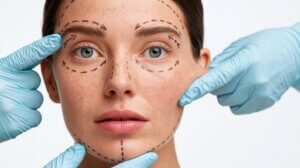
Decades of ultraviolet exposure can damage collagen and elastin, leaving facial skin coarse, leathery, deeply crepey and unevenly pigmented. Laser resurfacing for the face targets damaged tissue at controlled depths while stimulating collagen remodeling, helping create smoother, firmer and more evenly textured skin.
How much damage can repeated sun exposure cause over time? A 2026 NIH study comparing outdoor and indoor workers found that older outdoor workers showed accelerated facial collagen loss alongside other structural skin changes associated with cumulative UV exposure. These findings help explain why addressing chronic sun damage often requires more than topical products.
What Happens to Skin After Decades of Sun Exposure?
Years of ultraviolet exposure can change the skin far below its visible surface. The damage affects several structures that normally help keep facial skin firm and smooth:
- Collagen breakdown
- Abnormal elastin
- Uneven pigmentation
Collagen Breakdown
UV radiation speeds the breakdown of collagen within the dermis. Collagen normally gives skin much of its strength and structure. As collagen levels decline, deeper wrinkles can form and skin becomes thinner and less resilient.
Abnormal Elastin
Long-term sun exposure also damages the fibers that allow skin to stretch and return to shape. Abnormal elastin can accumulate within the dermis.
This condition is known as solar elastosis and is one of the structural changes associated with chronic sun exposure.
Uneven Pigmentation
Chronic UV exposure can also disrupt normal pigment production. Dark spots and patches may develop as sun damage accumulates.
These changes often appear alongside coarse texture and deep crepiness. Moisturizers may temporarily soften the surface, but they cannot restore damaged collagen or elastin deeper within the skin.
How Does Laser Resurfacing for the Face Address Severe Photoaging?
Laser treatments can reach damaged skin more precisely than products applied to the surface. The treatment method and depth depend on the extent of sun damage and the patient’s skin:
- Ablative resurfacing
- Fractional treatment
- Collagen remodeling
Ablative Resurfacing
Ablative lasers remove controlled amounts of damaged outer skin. Heat also reaches deeper tissue and triggers the body’s natural repair process. More intensive treatment may improve pronounced wrinkles and rough texture. However, deeper resurfacing generally requires a longer recovery period.
Fractional Treatment
Fractional lasers treat microscopic columns of skin rather than the entire surface. Untreated skin remains between these tiny treatment zones. This approach can shorten healing compared with fully ablative resurfacing. Several sessions may be needed to address more advanced damage.
Collagen Remodeling
Laser resurfacing for the face also affects the tissue beneath the visible surface. Controlled laser energy stimulates a wound-healing response in the dermis. Fibroblasts then produce new collagen and reorganize existing fibers. The skin can continue to improve for months as this remodeling takes place.
Why Can Resurfacing Improve Leathery and Crepey Texture?
Severe crepiness involves more than dry skin or temporary loss of moisture. Years of sun exposure weaken the deeper framework that helps keep skin firm and resilient.
Laser resurfacing creates controlled injury in the skin, prompting a healing response. Fibroblasts, the cells responsible for producing collagen, become active during this process. As new collagen develops and existing fibers reorganize, the skin can gradually become smoother and firmer.
The effects don’t end when the initial redness and peeling fade. Collagen remodeling can continue for several months following treatment.
Resurfacing can also improve the rough texture associated with severe sun damage. Removing damaged surface tissue allows healthier skin to emerge as the area heals. Deep lines may soften as new collagen develops underneath them.
Results vary according to the depth and severity of the original damage. Resurfacing cannot return decades of sun-exposed skin to its original condition. Instead, it can improve texture and firmness by encouraging the skin’s natural healing and remodeling processes.
What Should Patients Expect From More Intensive Resurfacing?
Treating severe photoaging often requires stronger laser settings than correcting mild surface damage. Greater treatment depth can improve stubborn changes, but recovery usually becomes more involved. Redness and swelling commonly develop soon after treatment.
Peeling or crusting can occur with deeper resurfacing. These effects gradually ease as new surface skin forms. Recovery time depends heavily on the laser and treatment intensity. Deeper ablative procedures generally require more downtime than lighter fractional treatments.
Patients must follow their aftercare instructions carefully during this period. Proper skin care protects healing tissue and lowers the risk of complications. A professional evaluation is important before choosing treatment depth. Skin tone can affect the risk of unwanted pigment changes after resurfacing.
Certain medications may also influence healing or increase sensitivity. A history of unusual scarring can affect treatment choices as well. More intensive treatment isn’t automatically the best option.
Frequently Asked Questions
Can Laser Resurfacing Remove Actinic Keratoses?
Actinic keratoses are rough growths caused by long-term ultraviolet exposure. Some can develop into squamous cell carcinoma, so they require medical attention.
Certain laser procedures may remove damaged surface tissue and reduce visible lesions. However, treating precancerous actinic keratoses requires proper diagnosis and an appropriate treatment plan. Suspicious spots should be evaluated rather than treated as cosmetic concerns.
Are Certain Skin Tones More Susceptible to Pigment Changes After Laser Treatment?
People with more melanin may face a higher risk of post-inflammatory hyperpigmentation after some laser procedures. The treated area can become darker during healing.
Less commonly, resurfacing may cause areas of lighter pigmentation. Choosing suitable laser settings can reduce these risks. Pre-treatment skin care and careful sun protection may also be recommended.
How Long Does Collagen Remodeling Continue After Resurfacing?
Collagen remodeling continues beyond the initial healing period. Laser treatment triggers repair processes within the deeper layers of skin.
New collagen develops gradually while existing fibers reorganize, so improvements in firmness and texture may continue for several months.
Combatting Photoaging
With careful treatment planning and consistent sun protection, laser resurfacing for the face can improve leathery texture, deep crepiness and visible sun damage.
At Popp Cosmetic & Reconstructive Surgery, we have provided cosmetic and reconstructive surgical care in Omaha since 1983. Dr. Jeffrey C. Popp is a fully certified cosmetic and reconstructive surgeon supported by board-certified anesthesiologists and registered nurses. Our distinguishing advantage is our state-of-the-art surgical center, which is both state licensed and nationally accredited.
Get in touch to find out how we can help with your skin rejuvenation!